
OSINT data is everywhere. Making sense of it is the hard part.
Open Source Intelligence rarely arrives neatly packaged.
Instead, analysts face scattered websites, dense PDFs, endless social threads, partial data leaks, and fragments that refuse to line up.
The real challenge is not access.
It is speed, relevance, and clarity.
That is where artificial intelligence steps in. And despite the skepticism surrounding AI, OSINT professionals tend to view it differently. Not as a threat, but as leverage.
For investigators, AI is not a shortcut.
It is a force multiplier.
This guide shows how to integrate AI into real OSINT workflows, without hype, without automation fantasies, and without surrendering analytical judgment.
What can AI actually do for OSINT analysts?
Well-applied AI performs one job extremely well:
it absorbs scale so humans can focus on judgment.
In practice, AI can:
- Read and condense volumes of text no analyst could handle manually
- Spot inconsistencies, repeated narratives, or anomalies
- Extract structured data from unstructured material
- Cross-reference material across multiple sources
- Handle basic multilingual analysis
- Suggest unexpected investigative pivots
In other words, AI takes over the slow, exhausting parts of OSINT work.
The analyst remains responsible for verification, interpretation, and decision-making.
AI does not replace OSINT tools.
It sharpens them.
Prompting: how to “speak” to AI without getting junk answers
AI systems do not think. They execute instructions.
That makes prompting the single most important skill in AI-assisted OSINT.
A prompt is not a question.
It is an operational brief.
The most reliable prompts follow a clear structure:
Role
Define how the system should behave.
“Act as an OSINT analyst reviewing leaked documents.”
Task
State exactly what you want.
“Extract all personal names and associated dates.”
Rules
Set boundaries.
“Do not infer missing data. Use only what appears in the text.”
Output format
Specify delivery.
“Return results as a table.”
Think of AI as a junior analyst who works at machine speed but needs tight supervision. Without structure, it guesses. And guessing is poison for investigations.
Why AI responses still miss the mark
Even strong prompts sometimes produce weak output. Refinement fixes most of that.
One rule matters more than all others:
explicitly forbid guessing.
Add a line such as:
“If information is unclear or missing, respond with ‘unknown’.”
This single instruction dramatically reduces hallucinations.
Next, break complex work into stages.
Ask for extraction first.
Then relationships.
Then inconsistencies.
Iteration matters.
What works with one model may fail with another. When a prompt delivers clean results, keep it. That prompt becomes part of your investigative toolkit.
The AI OSINT toolkit: not one tool, but a team
Professional OSINT never relies on a single platform. AI follows the same logic.
Below are categories that actually work in real investigations.
Generic AI analysts (ChatGPT, Claude)
Large language models function as fast text analysts.
They shine when fed human-language material: reports, chats, emails, manifestos, policy documents.
They excel at:
- Summarizing long documents
- Pulling names, locations, and timelines
- Highlighting internal contradictions
- Producing structured reports
They are not omniscient.
Used narrowly, they become dependable co-investigators.


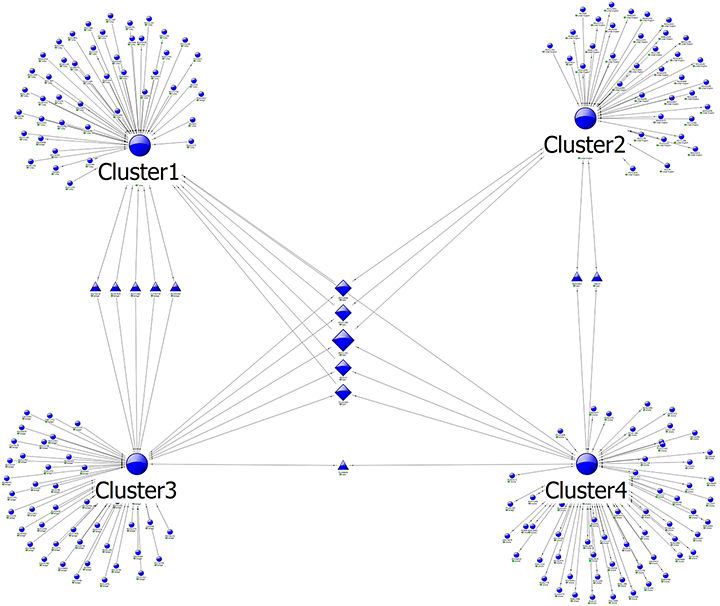
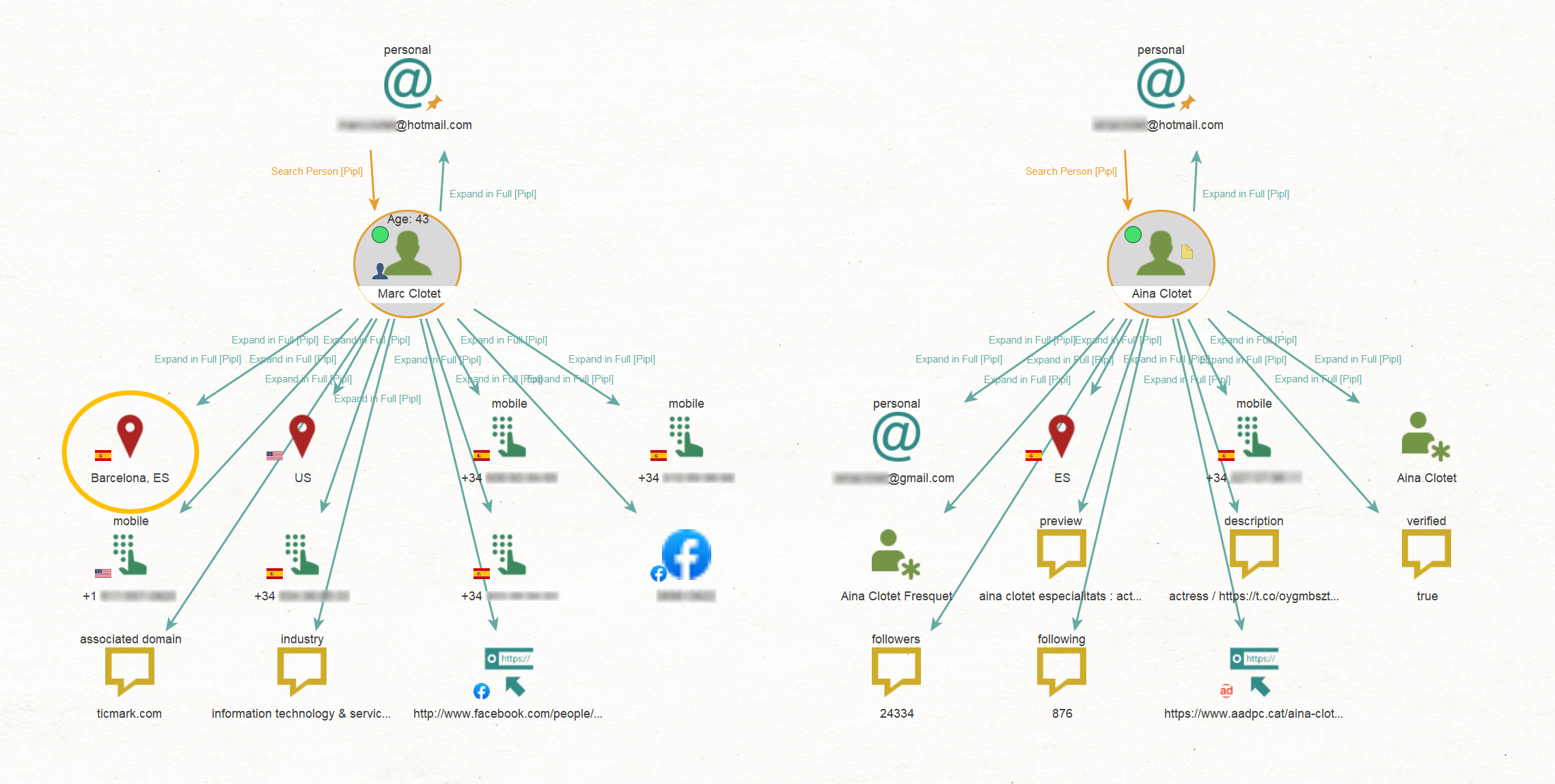
Visual investigation and mapping tools (Maltego, OSINT Industries)
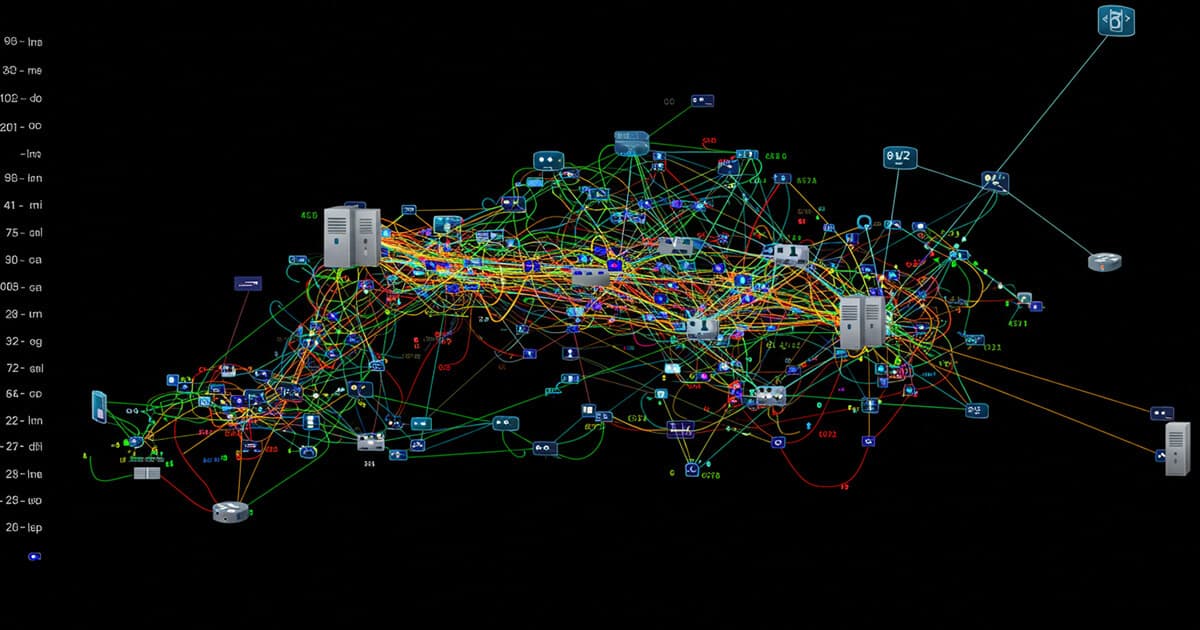
Visual analysis turns chaos into patterns.
Mapping tools show how identities, domains, phone numbers, and infrastructure connect.
AI adds another layer:
- Automated summaries attached to entities
- Faster recognition of relationship clusters
- Cleaner understanding of complex networks
If an investigation feels tangled, visual AI-assisted mapping often untangles it.
Evidence capture and documentation (Hunchly)
OSINT without documentation is useless.
Archiving tools quietly record every page visited, every timestamp, and every source hash. AI-enhanced systems reduce human error and preserve evidentiary integrity.
These tools:
- Capture full webpages automatically
- Store timestamps and cryptographic hashes
- Organize material into searchable collections
- Generate court-ready reports
For long investigations, they prevent the nightmare of lost screenshots and undocumented findings.
Large-scale data processors (Elastic, Haystack)
Some cases involve datasets too large for manual handling.
Leaks, archives, and document dumps require industrial-scale processing.
These systems allow:
- Contextual keyword search
- Document clustering
- Theme detection
- Pattern recognition across thousands of files
They belong in investigations where volume alone becomes an obstacle.
AI-assisted OSINT in action: a practical scenario
A LinkedIn user named Astra Velorin reaches out.
Her title reads: “Ambassador of the Outer Spiral Arm.”
She offers a position as “Abduction Assistant.”
Sci-fi roleplay or social engineering?
Time to test it.
Step one: profile analysis
Her bio text goes into an AI model.
A simple search request reveals the phrase originates from a science fiction universe.
First red flag.
Step two: pivot generation
A clear prompt asks:
“List three follow-up checks to verify this profile’s authenticity.”
The system suggests:
- Username reuse across gaming forums
- Corporate registration for the alleged embassy
- Reverse image searches on profile photos
Each suggestion fits standard OSINT logic.
Step three: image verification
Reverse searches reveal profile images pulled from a sci-fi art subreddit.
Second red flag.
Step four: document analysis
Astra sends a long PDF titled First Contact Proposal.
AI comparison shows it matches a known science fiction novel verbatim.
Final confirmation.
Step five: summarization and documentation
AI generates a clean case summary.
Archiving tools preserve every step.
Conclusion: no aliens. Just creative deception.
Offer declined. Earth remains safe.
What matters going forward
AI does not eliminate OSINT skills.
It amplifies them.
Investigators who treat AI as an assistant, not an oracle, gain speed without losing rigor. Those who rely on it blindly lose both.
Used properly:
- Your role stays secure
- Your investigations move faster
- Your focus shifts from drudgery to analysis
The excuse of “too much data” no longer holds.
Ready to integrate AI into your OSINT workflow?
Start small.
Build prompts you trust.
Pair AI with traditional tools.
Document everything.
And when AI handles the boring work, use the time you saved to do what machines still cannot: think like an investigator.
Join the community:
Newsletter → https://coondivido.substack.com/
Telegram → https://t.me/osintaipertutti
Telegram → https://t.me/osintprojectgroup